Table of Contents
5. Building the Next Generation of Smart Tourism with AI
AI-Driven Service Innovation
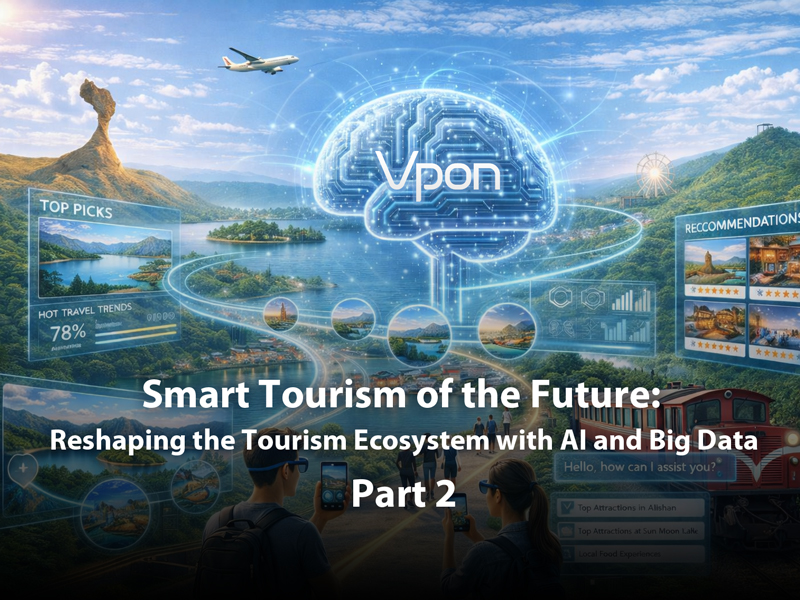
AI is comprehensively reshaping the tourism industry, driving a dual-axis transformation that spans both personalized travel experiences and intelligent destination management. On the service side, AI analyzes traveler behavior and preferences, and combines multilingual virtual assistants with AR/VR technologies to deliver real-time, highly personalized travel support — with Indonesia’s AI MaiA and Vietnam’s 24-hour AI chatbot standing as concrete examples of this in practice. On the governance side, AI assumes the role of a “smart brain,” optimizing the management of high-traffic zones through real-time crowd monitoring and predictive algorithms, while simultaneously tracking key indicators such as carbon emissions to ensure that tourism growth remains aligned with the Sustainable Development Goals (SDGs).
Global Benchmark: Learning from Expo 2025 Osaka, Kansai
The 2025 Osaka World Expo is a real world showcase of the future of smart tourism. The event uses AI concierges and digital human guides to provide multilingual support and personalized visitor experiences:
AI Concierge and Virtual Guides: AI voice-guided robots provide real-time multilingual translation, reducing waiting times while creating personalized interactive experiences.
- Contactless Ecosystem: The comprehensive adoption of facial recognition, mobile payments, loyalty reward systems, and cashless services brings greater convenience and interaction throughout the visitor experience.
- Future Mobility Integration (MaaS): Testing eVTOL (electric Vertical Take-off and Landing) aircraft, or “air taxis,” to connect urban transportation networks, overcoming ground limitations and helping address city congestion.
- Metaverse Expansion: Virtual online participation breaks geographical barriers. This new form of smart tourism connects both physical and digital environments, expanding the reach to potential travelers while stimulating future demand for real-world tourism.
6. Reshaping the Traveler Journey: Vpon’s Comprehensive Smart Tourism Solutions
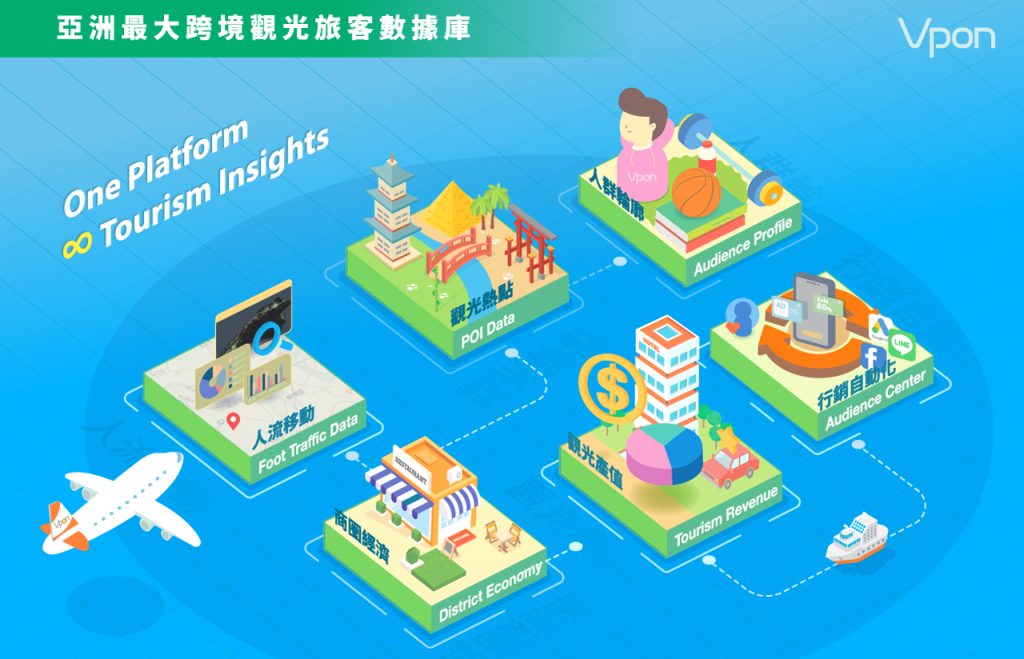
Building Regional Tourism Circles
Taiwan’s Tourism 2030 vision emphasizes the creation of regional tourism circles that connect different cities and attractions.
Through shared data across transportation, accommodation, and commercial districts, travelers can enjoy a seamless integrated experience of transportation × accommodation × consumption. Digital travel passes and Mobility as a Service (MaaS) solutions make it easier for travelers to explore multiple cities rather than staying at a single destination, further expanding tourism benefits.
To support the development of smart tourism, Vpon combines big data with AI-driven precision marketing, providing comprehensive data and digital advertising solutions that help tourism authorities and brands understand traveler origins, behavior patterns, and spending habits.
By integrating online and offline data, city marketing can precisely reach potential travelers, increase visitation rates and dwell time, and ultimately boost tourism spending. More importantly, Vpon enables marketing performance to be quantified and verified, ensuring that every marketing budget is transformed into measurable returns on investment.
This creates a sustainable smart tourism data ecosystem:
Traveler Insights → Market Strategy → Precision Marketing → Performance Verification
#1 Traveler Insights: Tourism Big Data Dashboard and AIR Reports
Before formulating strategies, tourism authorities must first answer three key questions: Where do travelers come from? Where do they go? What do they do?
■ Tourism Big Data Dashboard: Understanding Traveler Behavior to Drive Data-Based Strategies
Understanding traveler behavior is the starting point for all decision-making. Vpon’s Tourism Big Data Dashboard integrates mobile device data with multiple data sources to provide diverse analytical perspectives, including:
- Regional visitor traffic trends
- Weekday and weekend visitor flow analysis
- Traveler length-of-stay analysis
- Attraction visitation patterns
- Traveler origin analysis
- Crowd hot spot analysis
- Customized attraction monitoring
Through visualized data dashboards, city managers and tourism authorities can quickly understand the travel patterns and movement routes of different visitor segments. These insights can then be applied to event planning, attraction linkage strategies, transportation allocation, and urban operational strategies, enabling tourism management to move from experience-based decisions to data-driven governance.
■ Vpon AIR (Audience Insight Report): Traveler Profile Insights and Behavior Analysis
Vpon’s Audience Insight Report (AIR) combines AI with big data models to analyze the origins, age structures, interest tags, travel preferences, and spending capacity of potential domestic travelers.
Tourism authorities can clearly understand key questions about potential visitors:
- Who may visit (traveler origins and digital profiles)
- Why they visit (travel interests and motivations)
- Spending capacity (purchasing power and travel frequency)
- What they prefer to do during their trips (activity and content preferences)
These insights help tourism authorities design more precise tourism experiences. For example, cities can organize music festivals and night markets for younger audiences, develop family-friendly attractions for family travelers, or create in-depth travel experiences that combine culinary culture with local brands. Such insights help cities create culturally resonant and engaging themed events, transforming travel from simple sightseeing into a complete lifestyle experience.
#2 Cross-Border Data Targeting: Reaching Potential Travelers at the Right Time
Once traveler insights are established, the next step is determining how to reach potential audiences at different stages of their travel planning and influence their travel decisions.
Cross-Border Data Insights: Using Ponta Data to Identify International Travelers
■ Visualizing the Digital Profiles of Potential Travelers
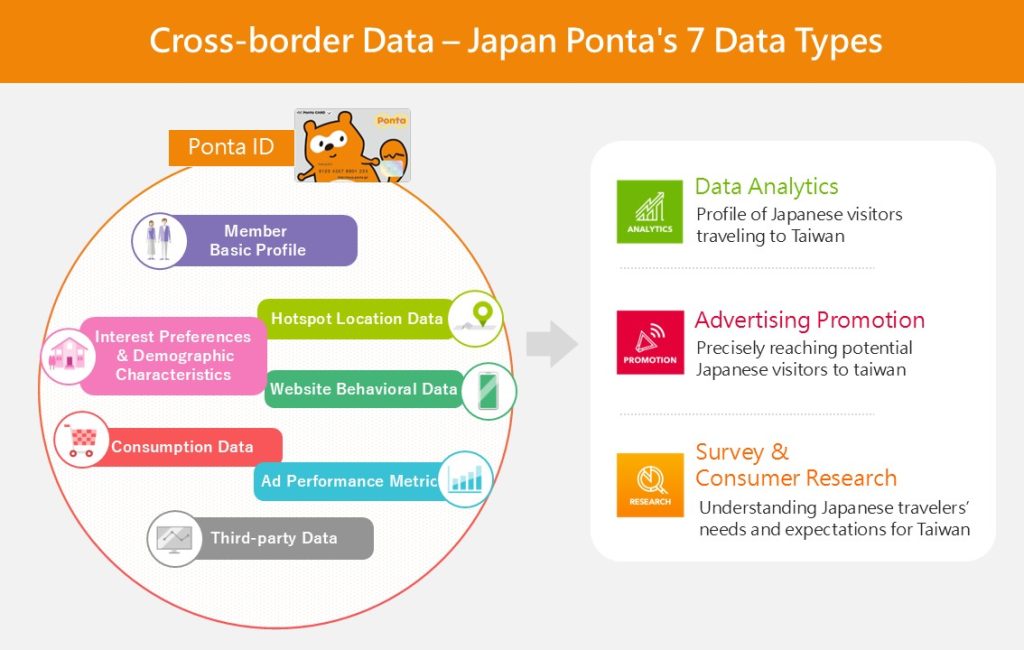
In the global tourism market, cross-border travelers have always been a key driver of urban economic growth. Vpon has partnered with Ponta, a major Japanese loyalty points platform, to establish a smart cross-border data analysis mechanism using more than 120 million member records and the Ponta Data Management Platform (Ponta DMP).
Through this cross-border data, cities and tourism organizations no longer need to rely on vague market assumptions. Instead, they can use real data to identify Japanese travelers with strong potential interest in visiting Taiwan even before they book flights.
■Precision Reach
This one-stop cross-border marketing system allows tourism authorities to deliver valuable travel information and advertising content through the Ponta App, while further verifying through data whether the targeted audience actually visits the destination.
The entire mechanism functions like a data-driven intelligent navigation system, helping destinations reach the right audiences at the most appropriate moment and maximize the effectiveness of tourism marketing budgets.
Ponta data sources include:
- Member Profile Data
- Purchase & Transaction Data
- Web & App Browsing Logs
- Geolocation Data
- Ponta Research Surveys
- Partner Ecosystem Data
#3 Precision Marketing: Multi-Touchpoint Deployment
■pDOOH (Programmatic Digital Out-of-Home): Tourism Touchpoints in Smart Cities
In a smart tourism environment, urban public spaces are the most direct touchpoints for communicating with travelers.
The pDOOH (Programmatic Digital Out-of-Home) platform integrates real-time visitor flow and geographic data, helping tourism authorities deliver targeted advertisements on outdoor screens located at airports, transportation hubs, commercial districts, large shopping malls, retail chains, and popular attractions.
Through big data analysis, the system can identify high-potential traveler groups—such as international tourists, retired senior travelers, or high-end consumer segments—and dynamically display advertisements in areas where these audiences are most active.
■Vpon ADN (Ad Network): Expanding Tourism Marketing Reach
Vpon ADN ad network deeply integrates travel platforms, content media, and mobile applications (apps), enabling cross-platform precision marketing through big data analysis.
Tourism authorities can dynamically adjust advertising content based on travelers’ interest tags, geographic location, and mobile device usage scenarios. For example, they can deliver destination branding videos to potential travelers who are currently searching for travel information, or precisely recommend new attractions and seasonal limited-time activities to travelers who have already visited.
At the same time, every ad delivery accumulates into a valuable data asset. Vpon can integrate the interaction data generated by advertisements into a brand’s or tourism authority’s Customer Data Platform (CDP) or Composable CDP (CCDP), and continuously analyze it in combination with first-party and third-party data. This data can also be further applied to external platforms such as Google and Meta, forming a long-term, data-driven marketing cycle.
Through AI algorithms, Vpon ADN can learn market changes and traveler responses in real time, quickly adjust delivery strategies, and improve tourism conversion rates and revisit intention.
#4 Performance Verification: Quantifying Tourism Marketing Results
■O2O Online-to-Offline Traffic Platform: Verifying Marketing Effectiveness
A common challenge in tourism marketing is: How can we prove that digital marketing exposure actually drives physical visits?
Vpon’s O2O (Online-to-Offline) traffic platform bridges the information gap between digital advertising and real-world behavior.
By integrating mobile device data with physical location data, the platform helps tourism authorities accurately track whether audiences exposed to digital advertisements actually visit specific attractions, event venues, or commercial districts.
Tourism authorities can clearly understand the attribution path from “Ads exposure → Actual Visit”, including:
- Evaluating the real contribution of different marketing campaigns to visitor traffic
- Analyzing the actual travel routes of different traveler segments
- Accurately quantifying the economic impact of tourism activities on surrounding commercial districts”
This visualized performance verification mechanism ensures that tourism marketing is no longer measured only by exposure or clicks but can clearly quantify actual visitor flows and tourism economic value.
7. Global Smart Tourism Case Study — Vpon × Osaka Tourism Bureau
Smart tourism has become a key development direction for the global tourism industry. For Taiwan to achieve the Tourism 2030 goal of generating NT$1 trillion in tourism revenue, it must establish a stable and centralized system that optimizes every stage of the traveler journey.
A recent representative international case is the “Osaka Tourism Data Hub” , developed through a collaboration between Vpon and the Osaka Tourism Bureau. This platform breaks down data silos across 43 municipalities within Osaka Prefecture, establishing a unified system for tourism management and marketing decision-making.
Before the Data Hub, Osaka’s cities faced major challenges:
- Different Metrics
Each municipality defined tourism performance indicators differently, resulting in a lack of standardized evaluation benchmarks. - Limited Resources
Some small and medium-sized cities had limited budgets and technical capabilities, making it difficult to conduct data analysis. - Lost Knowledge
When personnel changed, accumulated data and experience were difficult to transfer and preserve effectively.
Integration Achievements of the Osaka Tourism Data Hub
Vpon helped Osaka build a centralized platform, enabling all municipalities to equally access high-quality tourism data and analytical tools. The platform integrates:
- Visitor Spending Data
- Traveler Behavior before and during trips
- Accommodation Statistics
Through standardized tourism KPIs, cities across Osaka can make data-driven decisions, ensuring that marketing strategies and policy directions align closely with real traveler behavior.
Three Key Directions Taiwan Can Learn from Smart Tourism
- Establish a cross-ministerial tourism DMP platform
(based on a “Single Source of Truth” data framework) - Provide standardized tourism management tools across regions to help promote local characteristics and emerging attractions
- Continue investing in digital tourism infrastructure
Becoming a smart tourism leader requires the right AI partner. Trusted by over 200 local governments, Vpon delivers AI-powered tourism solutions that help destinations transform digitally and align with the 2030 smart tourism vision.
Contact Vpon today to start building a smarter, more connected travel experience.
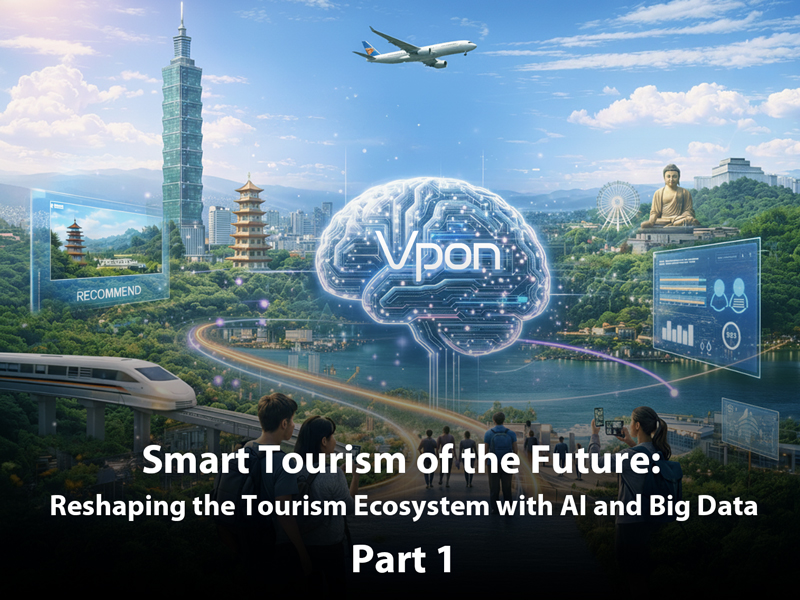
👉Read full story:Smart Tourism of the Future: Reshaping the Tourism Ecosystem with AI and Big Data (Part I)